
Bankston Creech (he/him, she/her) is a graduate student working towards a Master’s in Public History at Rutgers and a Work Study Intern at The Woodlands.
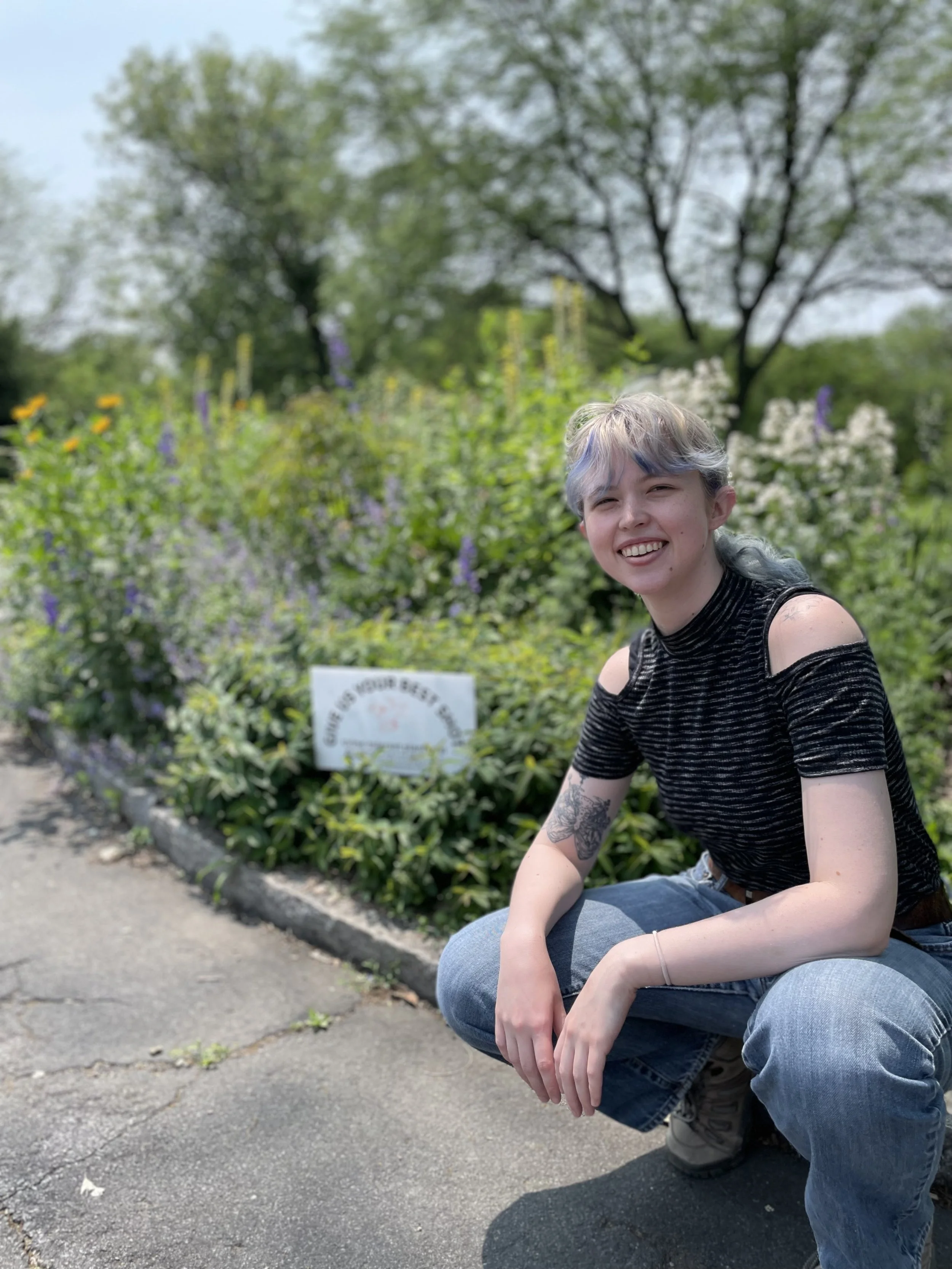
Bankston in front of a perennial garden near the Hamilton Mansion.
When I approached The Woodlands staff about interning at The Woodlands as part of my public history master’s, I knew I wanted to do something with the Grave Gardeners.
The Grave Gardener program is a public historian’s dream: gardeners get to literally dig into history, tending to the graves of early Philadelphians and learning about Victorian gardening culture firsthand. There’s a lot of fuss in the historical field about what kind of stories we tell and how they get told, and part of that conversation is how to spotlight the histories of everyday people. Historical sites like The Woodlands are exciting to visit because they give us a chance to explore a landscape filled with overlapping, ordinary histories from the 18th century to the present day.
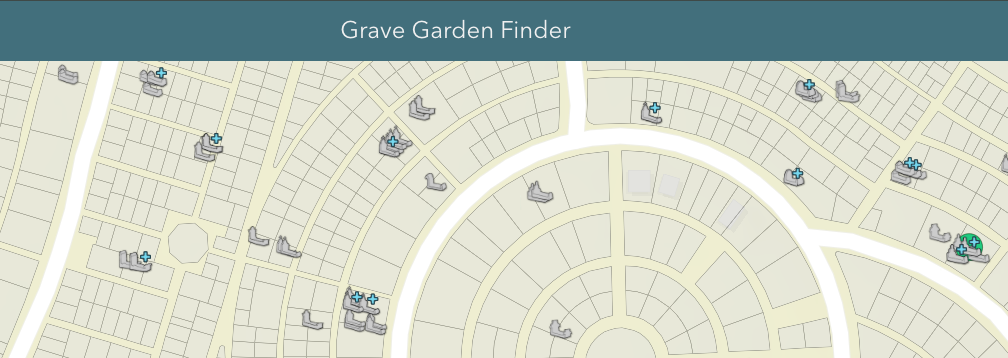
Over the past year, I’ve learned a lot about how to do public history work through collaborating with GIS expert Greg Fisher, the Grave Gardeners, and the rest of the staff at The Woodlands to launch a new interactive map featuring biographies of some of the people buried in cradle graves. While some of these biographies have been published on The Woodlands’ blog by Grave Gardeners in the past, our hope is that having a digital map will make it easy for visitors to learn about the personal histories of cradle graves as they wander through the cemetery.
Every time I walk around The Woodlands I see a headstone that I hadn’t noticed before and wonder about the person who was buried there. Just as the Tree Finder map makes it possible to recognize arboreal friends in West Philly’s largest green space, I hope that this new Grave Garden map will be a first step in helping visitors learn about some of the cemetery’s permanent residents as they encounter them.
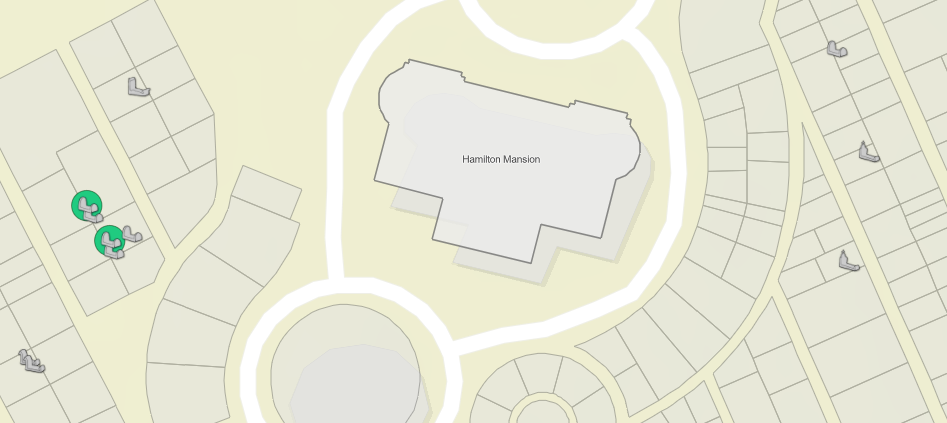
A section of the Grave Garden Finder, highlighting the Hamilton Mansion and surrounding Grave Gardens.
The grave gardens at The Woodlands were popular during the mid-19th and early 20th centuries, which is not my period of expertise (I’m an early modern girly, as they say), so I’m very grateful that this was a collaborative project and not something I had to research all on my own. While I did do some background research and fact-checking to ensure everything on the map is historically sound, Grave Gardeners were the ones who journeyed to the archives and uncovered the biographies of their plots’ residents. I had the pleasure of chatting and emailing with a group of passionate and dedicated volunteers who took my research tips and resources and found some truly incredible stories about the people who rest in the graves they have dedicated their time to tending.
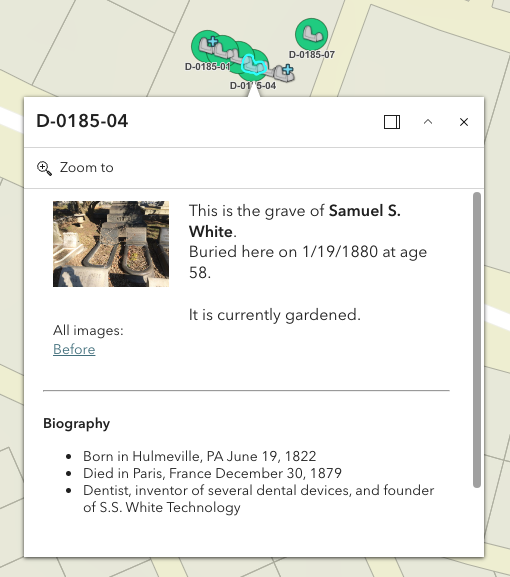
A sample of the Grave Garden Finder, highlighting the abbreviated biography for Samuel S. White.
During this past school year, I have continued working on the Grave Gardener map with The Woodlands staff, building up a pool of resources for volunteers who want to research their grave gardens to be able to do so in the future. I’m most excited about the two archival orientation workshops I led in March at the Historical Society of Pennsylvania. HSP is a research library in Center City that has one of the largest collections of early Americana in the US, including the Woodlands Cemetery Company Papers and vital records for residents of Philadelphia from the 16th century to the 20th. I have worked as an Access Services Librarian at HSP for almost three years now, and it was so incredible to welcome the Grave Gardeners to a place that I consider to be one of Philly’s top hidden gems. We talked about what a Special Collections Library and Archive is, some basic tips for how to search through the collections, and what different kinds of sources can tell us about a historical person’s life or the time period when they lived. I got to do some of my own sleuthing through the archives to pull some material for Grave Gardeners to see in person, including the original plan of The Woodlands Cemetery, Victorian seed catalogues, and burial records for the White Family (who you can learn more about on the map!). I would be remiss in my employee duties if I didn’t mention here that you too can look at any of this material if you make a research appointment at HSP.
I don’t want to spoil too much of what’s in the Grave Garden Finder, so I won’t tell any specific stories, but I have been reflecting on the historical problems, questions, and possibilities that working on this project has brought up for me. Mostly, I have been thinking about absence: so many of the Grave Gardeners I talked to mentioned being surprised at how hard it is to find anything more than a person’s name and maybe their family tree in the archives. This was especially true of gardeners researching women and children. I’m familiar with this frustration from my own experiences as a researcher and as an archival librarian, but it was especially striking to hear gardeners who had been tending their assigned grave for years, and who felt a deeply intimate connection with the person or people buried there, say that they wanted to know more but simply couldn’t find anything.
Many of the women and children buried under cradle graves were wealthy, prominent citizens of early Philadelphia, and yet there are almost no traces of them in the historical record. It troubles me to think about how many people with less power than they had have gone totally unrecorded, or have been actively buried by traditional archives. At the same time, working on this mapping project has made me hopeful; places like The Woodlands are making space for people to engage with history, which means seeing the gaps that have been made in the archives. It’s worthwhile to do what we can to fill in these gaps—I hope that our map does that, especially as it continues to grow—but it is also important to acknowledge that we can’t uncover everything, and to spend time honoring the memory of people we can never fully know. I’m grateful to have spent last summer remembering at The Woodlands.
The Grave Garden map is still an ongoing project! If you are a current or past Grave Gardener and are interested in sharing any research you have done on your plot resident, please reach out to me at intern@woodlandsphila.org. If you want to learn more about your plot resident but don’t know how to get started, I’m also happy to chat about research strategies!
Written by: Bankston Creech (he/him, she/her), Work Study Intern