

Co-authored by Gabrielle Lynch (she/her) & Falere Fagoroye (she/her), Work Study Interns at The Woodlands
Hands On History
On a hot and humid August morning, we arrived at The Woodlands, a 54-acre Victorian-era cemetery located in West Philadelphia. The visit was part of our three-week Summer Institute program leading up to our first semester as graduate students in The Stuart Weitzman Department of Historic Preservation. The Summer Institute was designed to orient first year students to Philadelphia and provide a glimpse into a few historic sites. Prior to arriving at The Woodlands, most of the Summer Institute was discussion and classroom-based. Our day at The Woodlands provided an opportunity to apply some of the knowledge we had learned, perform hands-on preservation work, and get a behind the scenes look at a National Historic Landmark around the corner from Penn’s campus.
Getting Dirty & The Science of Headstones
After suiting up in brightly colored vests and safety equipment, we broke off into different groups, with some documenting the repair processes and others getting started on helping reset the stones. With the help of professionals from Masonry Preservation Group LLC and Heritage Conservation Co., and guidance from professors Kecia Fong, Roy Ingraffia, and Casey Weisdock, we were able to begin.
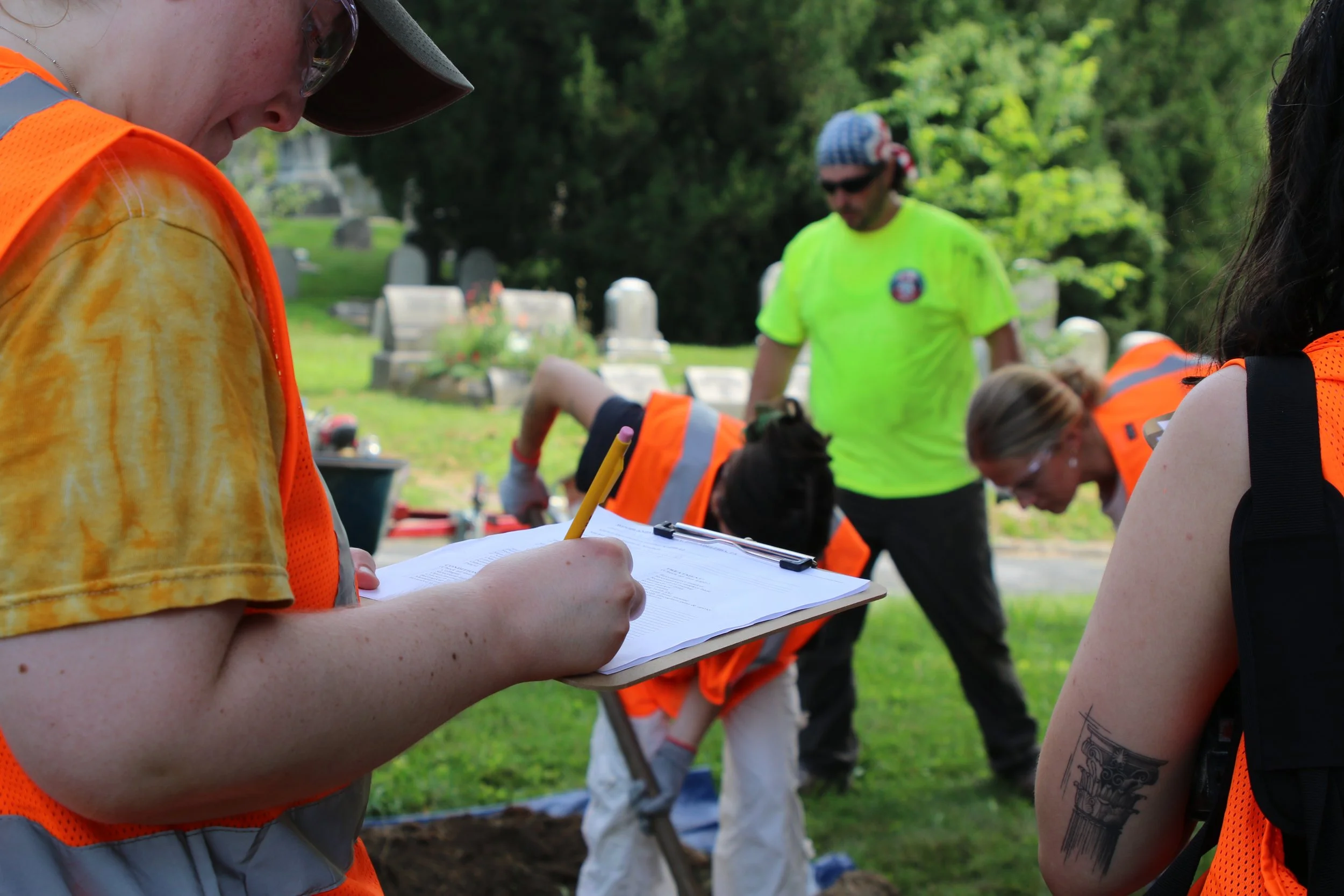
While to some, it may only look like standing around with a clipboard, the documentation is a critical first-step in the process of any preservation project. Documentation involved recording the headstone’s condition through photography and written description before and after the work.
In order to make sure everyone got experience with each step of the project, a handful of students were the recorders while the rest did the physical restoration work, alternating throughout the day, to give a break from the manual labor.

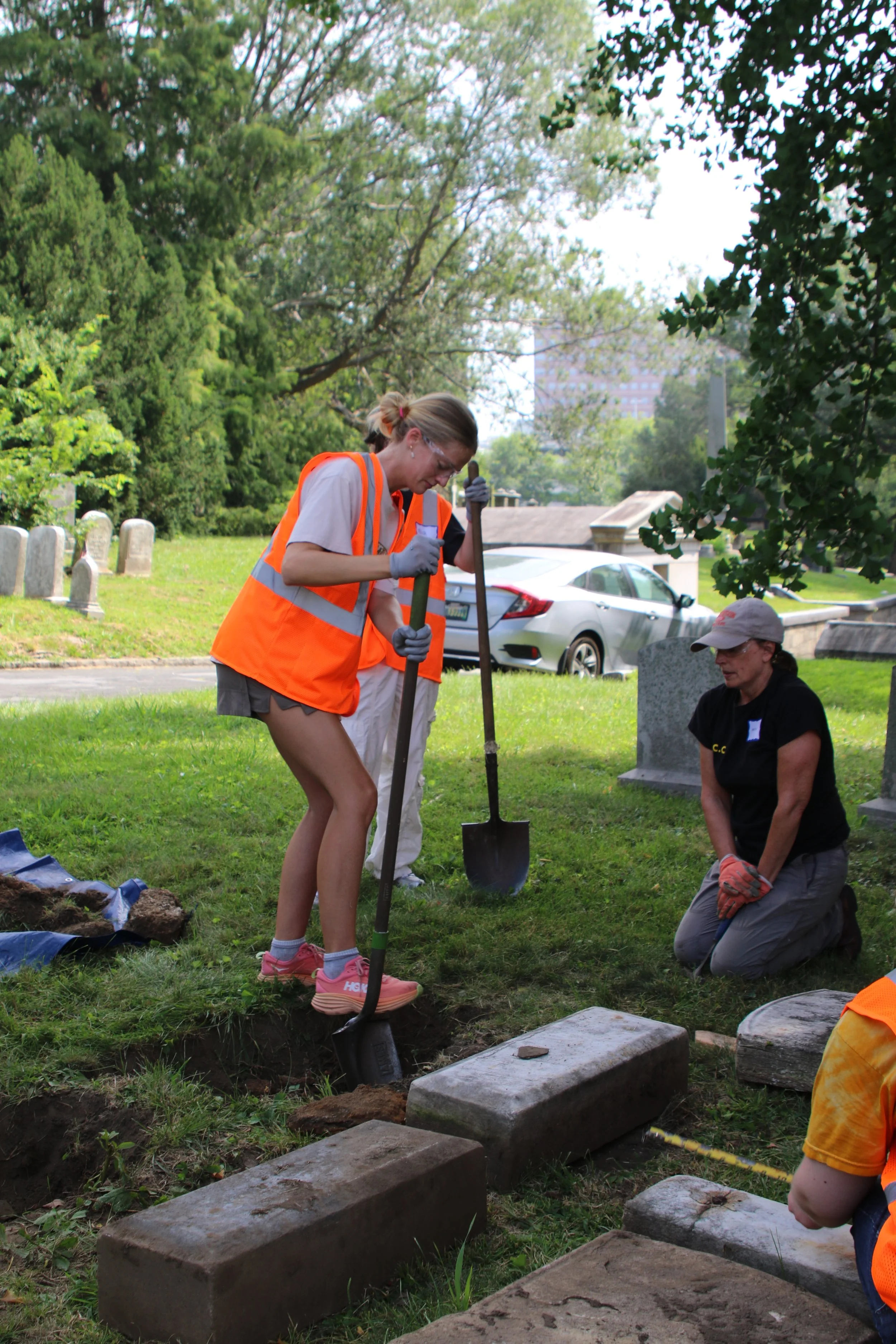
Headstones that needed repair were marked with neon pink flags by staff at The Woodlands before our arrival. First, we removed the headstone base and cleared out any debris. After this, we dug and tamped the dirt beneath the headstone to level the ground before resetting the stone. We then placed a brick foundation before setting the marble base on top of it. This process allowed us to learn about capillarity and moisture movement within stone from the ground, which can cause cracking if not properly accounted for.
Understanding capillary action is important when examining the headstones because we are dealing with a lot of moisture in the ground. The material of the headstones contain pores which act as small tubes through which water can rise due to the attraction of water molecules to the surface of the headstone. When this water enters the pores, it will leave minerals behind, such as salt, when it evaporates, which can lead to deterioration (salt migration). For these headstones, we were told it was inevitable that these stones would fall again, but it is our job to mitigate and slow this process the best we can.
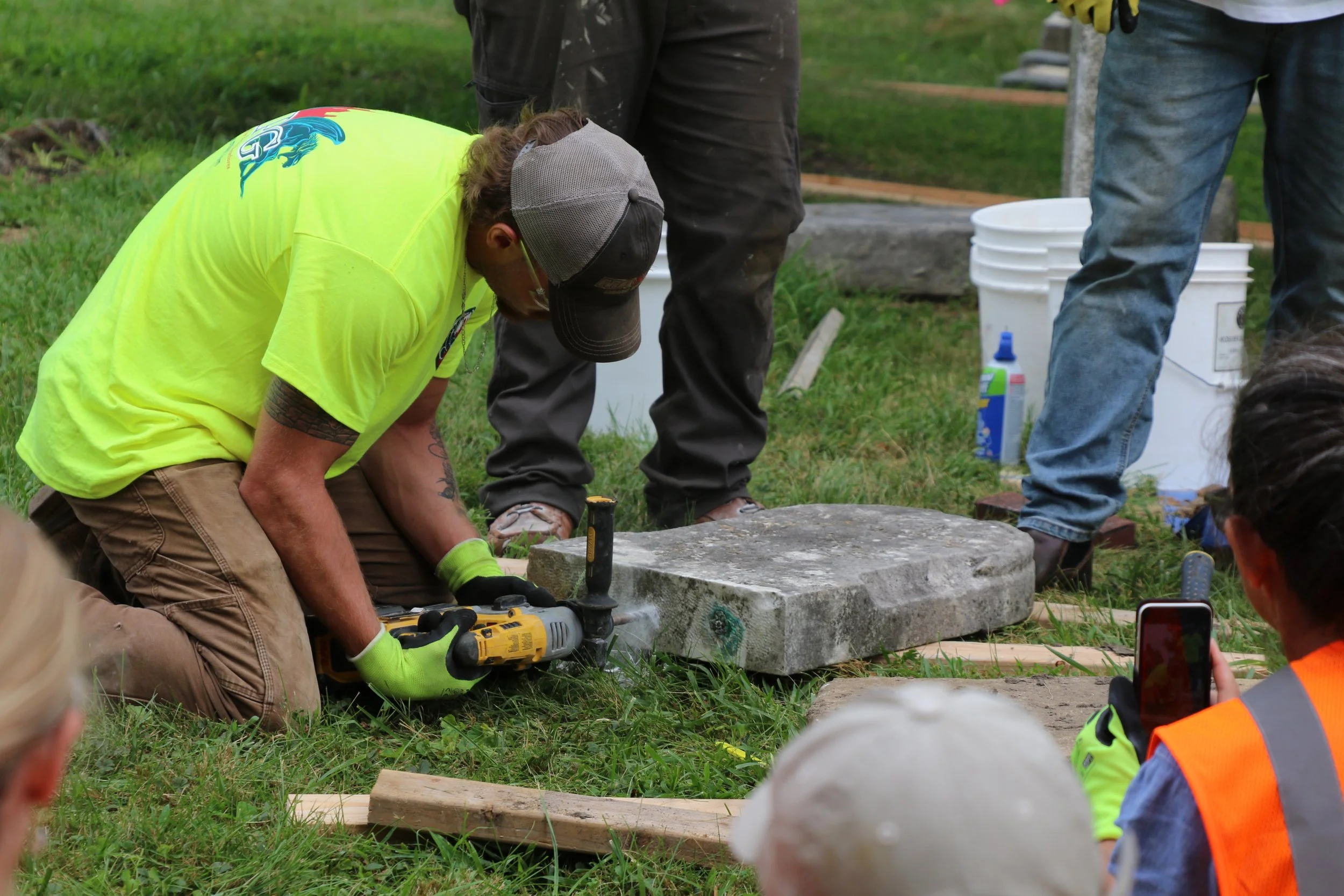
After laying a solid foundation, we began to drill. We drilled holes to reset the fiberglass pins. The use of fiberglass instead of steel pins is to account for the lack of flexibility between materials. Steel pins have a higher potential to crack the stone when it falls over since it is a rigid material, whereas the fiberglass will simply shatter, leaving the stone unscathed. Before we inserted the pins, we cleaned out the holes in the headstone by using acetone and blowing the dust out of the holes. The acetone removes any excess materials and dries quickly so as not to affect the setting of the epoxy we placed within the stone. After adding the epoxy into the stone, we worked together to lift the headstones into place and made sure not to bump into them or affect their orientation.
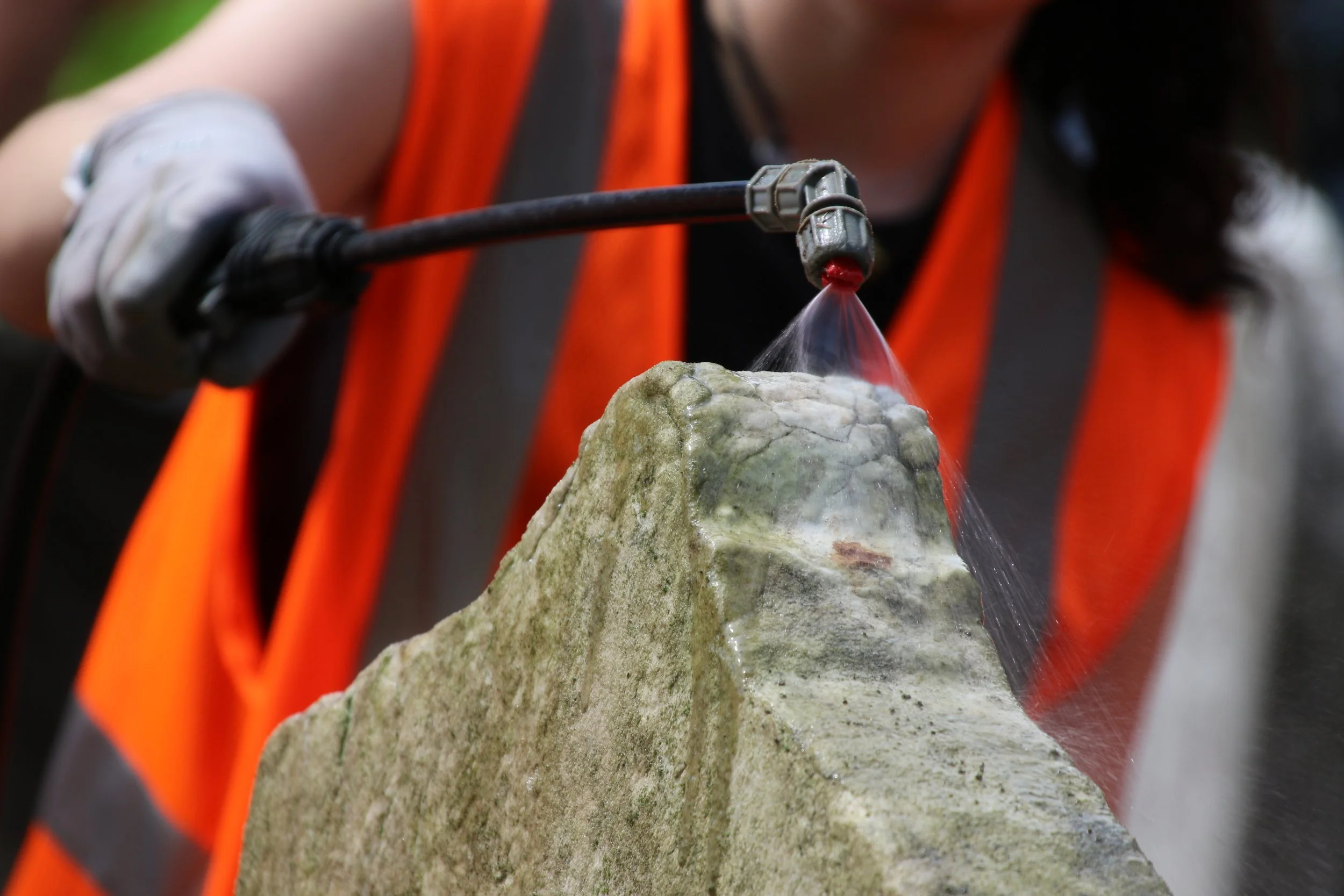
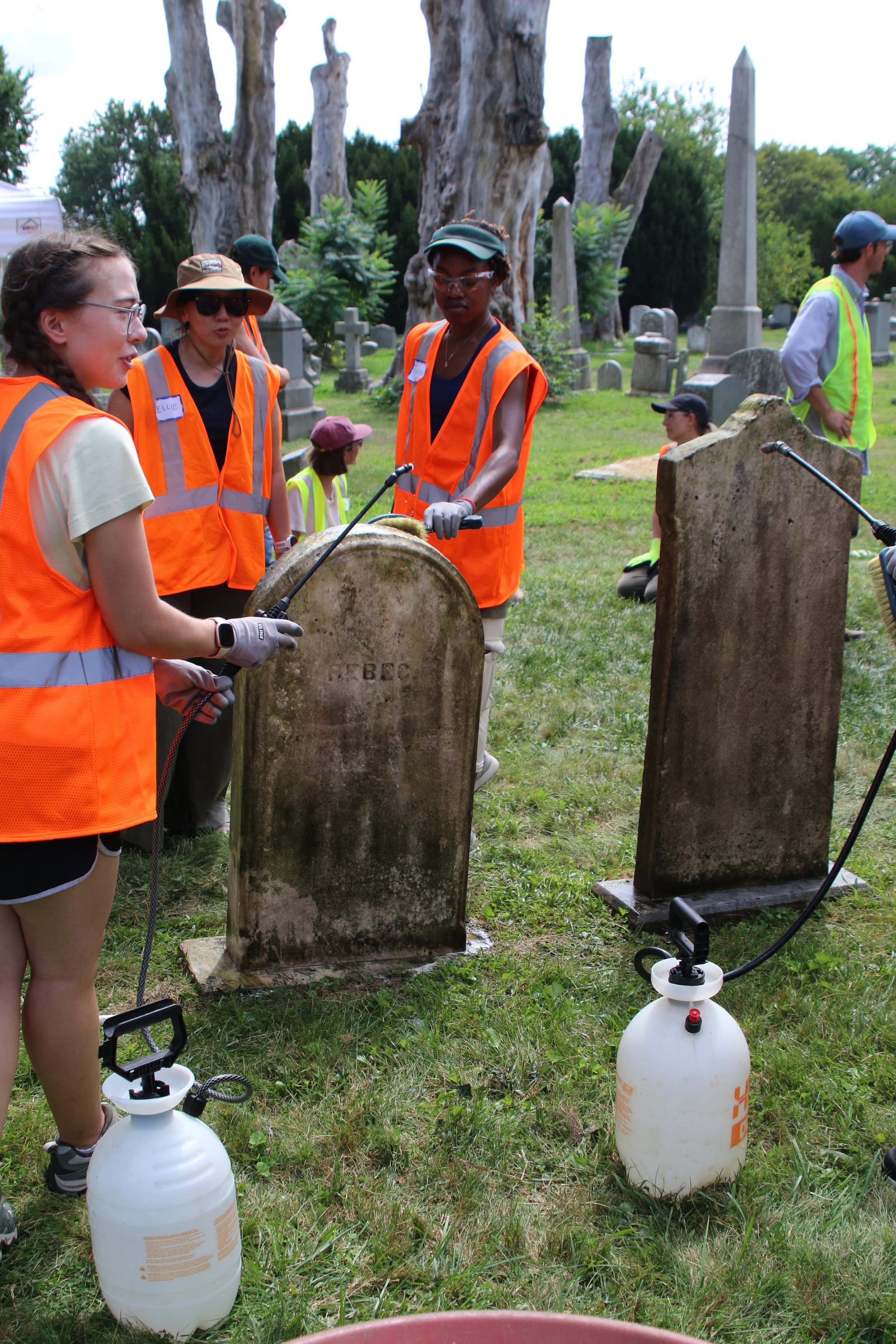
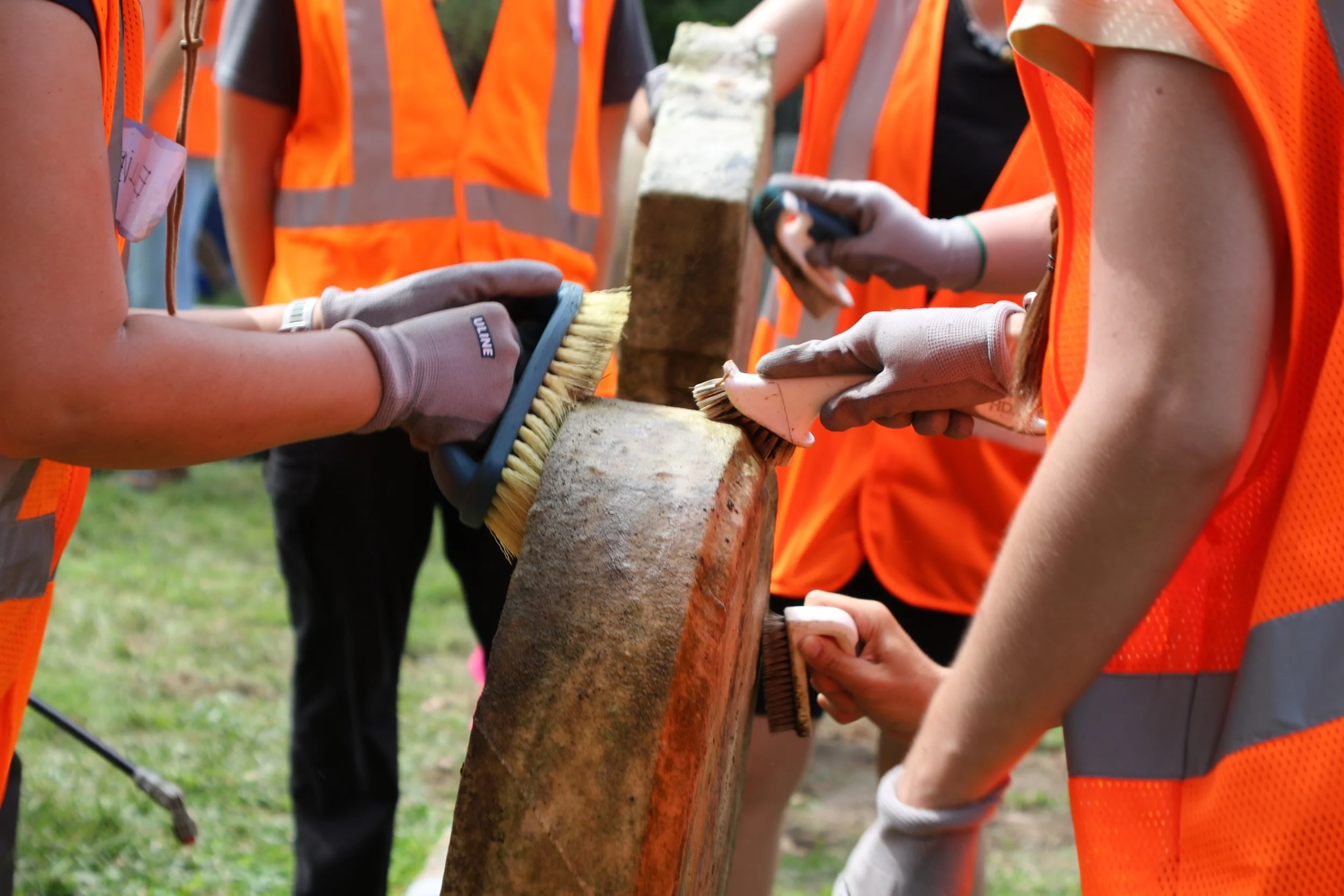
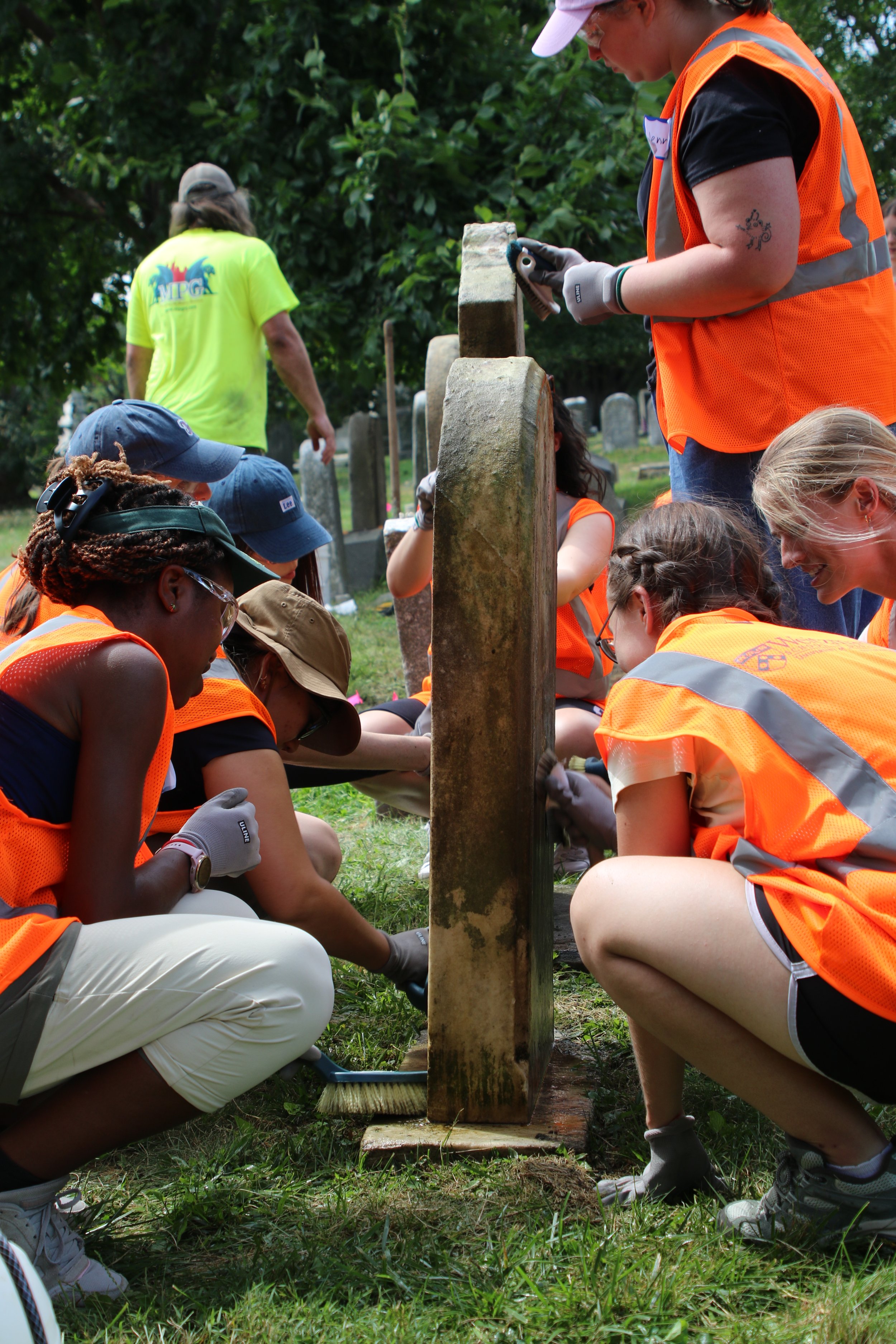

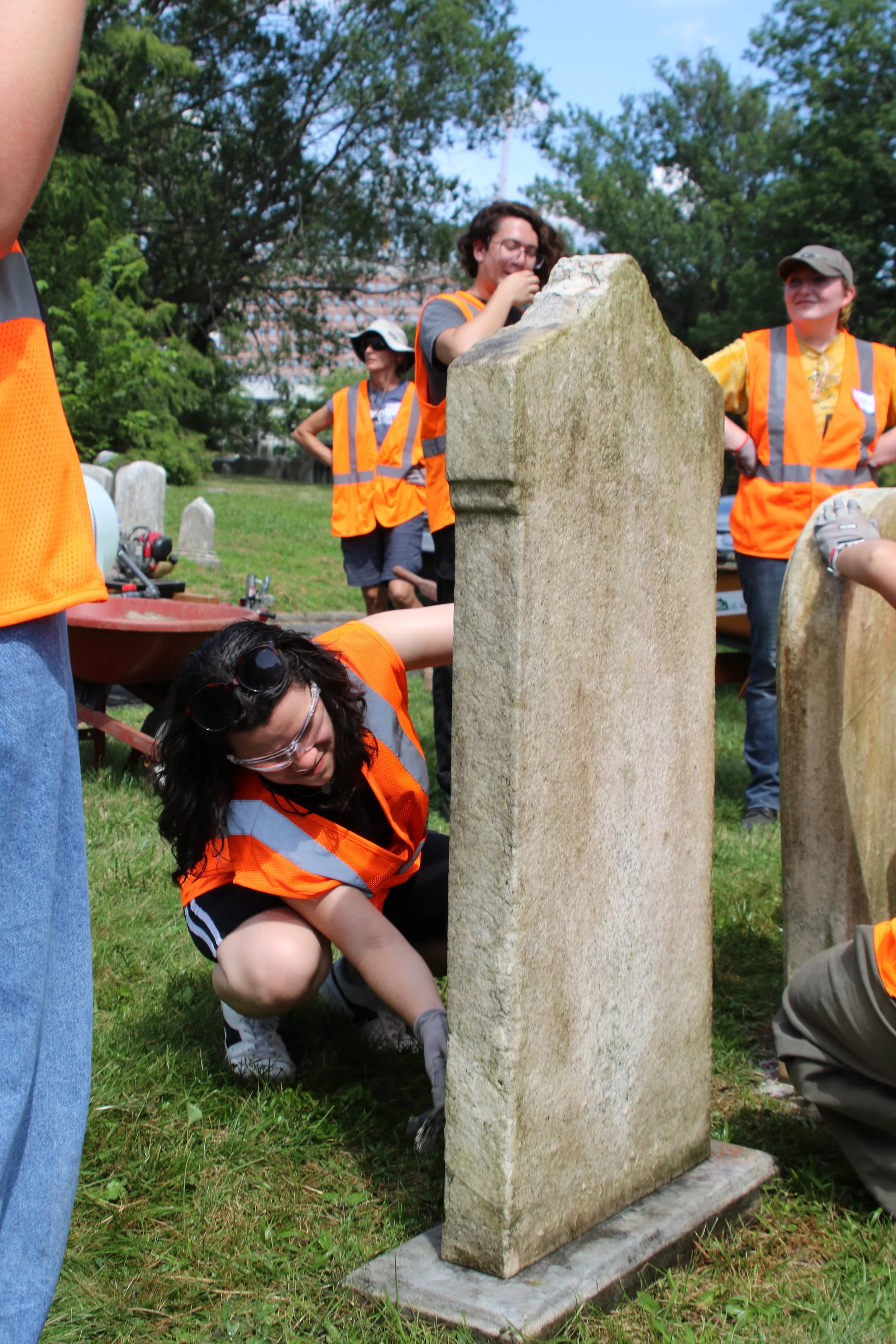
Since the headstones needed time to set, we also got to remove biogrowth from the stones by cleaning them. We sprayed a D2 solution onto the headstones, which is a biodegradable solution that breaks down and prevents further biogrowth from occurring. Using various brushes, wetook turns scrubbing the stones and spraying them with water afterward. This process was repeated a few times until it revealed a stark difference in appearance. The headstones appeared brighter, but D2 works overtime, so they will continue to improve.
From Summer Institute to Student Interns
Our day at The Woodlands was widely considered the highlight of the Summer Institute. The ability to engage in hands-on learning encouraged greater interest and engagement in conservation, allowing us to apply the new knowledge we had just learned. All of us were incredibly appreciative of the masons, instructors, and staff who provided their expertise and patience to make this informative day possible.
The skills we learned could be applied and built upon as we began the fall semester, particularly in the architectural conservation class, but in all the concentrations as well. In the architectural conservation science course taught by instructor Jose Hernandez, many of the topics center on masonry, including mortars, porosity, capillarity, and permeability. These lessons have been reiterated in our work study internship at The Woodlands.
At the end of a humid and dirt-filled day, we were proud to have made an impact on 150-year-old headstones. While continuing our work at The Woodlands, we have the pleasure of witnessing the shifts in the headstones as the D2 works. The surface becomes cleaner over time as the subsurface continues to release biological stains. We’re eager to repair more headstones across the site, and ready to get our hands dirty for other conservation projects thrown our way!

The Stuart Weitzman Department of Historic Preservation offers two graduate degrees: a two-year Master of Science in Historic Preservation (MSHP) and a one-year Master of Science in Design with a concentration in Historic Preservation (MSD-HP).
A Certificate in Historic Preservation is also available to students enrolled in other graduate degree programs in the Weitzman School (including Architecture, Landscape Architecture, and City Planning). The Weitzman School does not offer a specific Ph.D. program in historic preservation, but preservation faculty often work with students enrolled in the school's Ph.D. programs in Architecture and City & Regional Planning.