
Note: This post has been updated and was originally written by Rive Cadwalader in 2013.
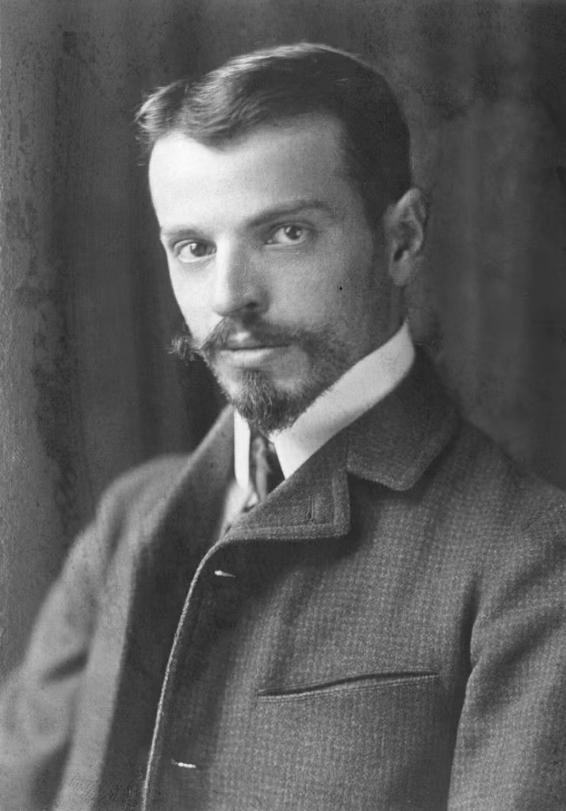
Paul Philippe Cret (1876-1945), portrait photograph, ca. 1910 (Source: jstor)
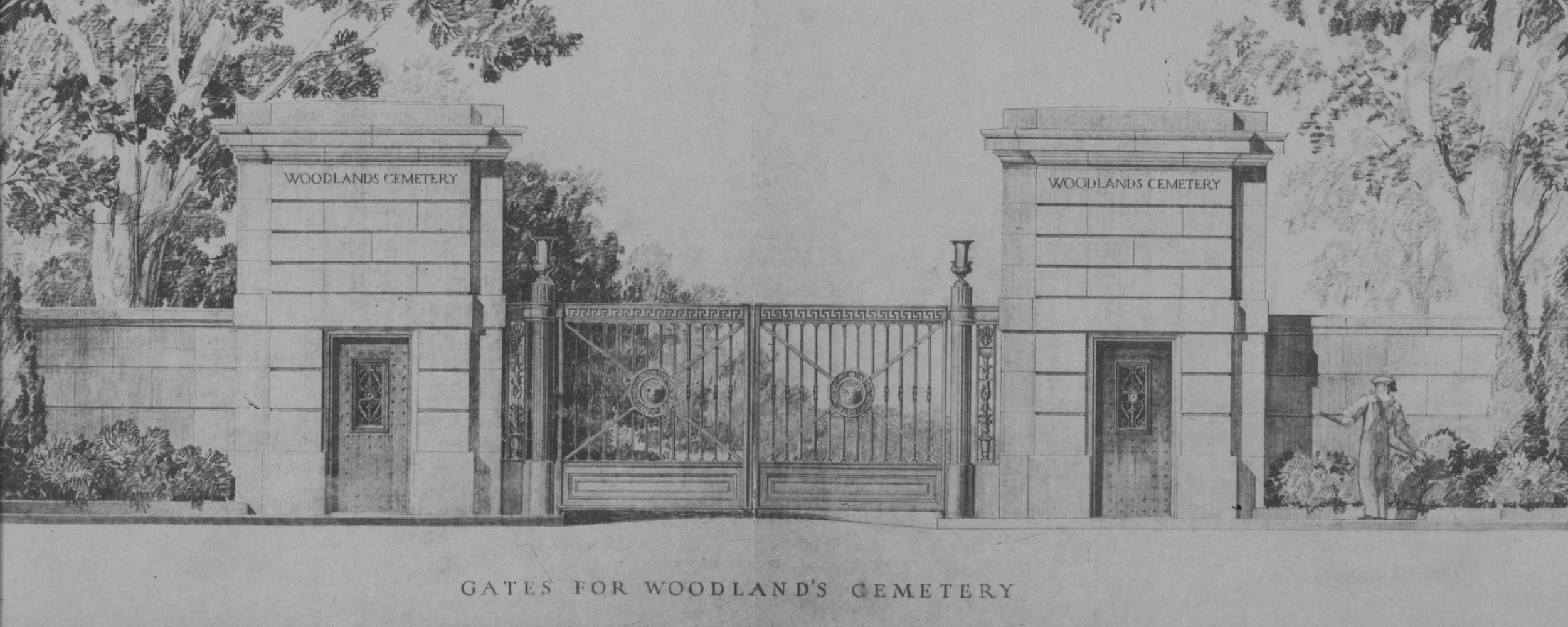
Philadelphia is celebrating an icon this weekend! The Benjamin Franklin Bridge turns 100 years old this Saturday, July 11. The bridge's architect, Paul Philippe Cret, also left his mark on The Woodlands. In 1936, Cret designed the elegant limestone gatehouses framing metal doors that still welcome visitors today. To appreciate how one architect shaped one of Philadelphia's most recognizable landmarks and the entrance to The Woodlands, it's worth taking a closer look at Cret’s life, career, and final resting place.
Paul Philippe Cret, the prolific Beaux-Arts architect who designed many structures in and around Philadelphia, was born in Lyon, France, in 1876. After studying in his hometown and then in Paris, Cret sailed for America to teach architecture at the University of Pennsylvania in 1903. Although he had established his own firm in Philadelphia by 1907, Cret served in the French army for the entire span of World War I, and received several military honors. Before returning to Philadelphia in 1919, Cret designed a European memorial at the request of Mrs. Theodore Roosevelt, whose son Quentin had died in combat.
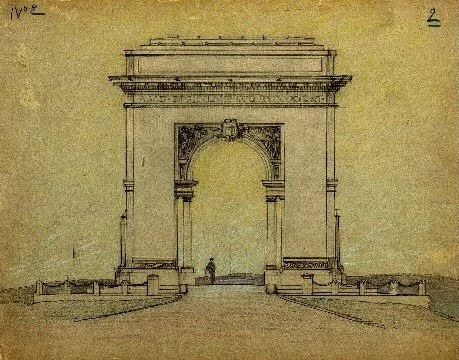
Cret’s architectural firm flourished through the 1920s. After World War I, there was a high demand for monuments to commemorate people who had served. The Frankfort War Memorial at Wakeling and Large Streets was designed by Cret, as was the National Memorial Arch at Valley Forge, and several commemorative structures in France.
Beginning in 1922, Cret designed the Delaware River Bridge (now the Benjamin Franklin Bridge), which at the time of its completion was the longest suspension bridge in the world.
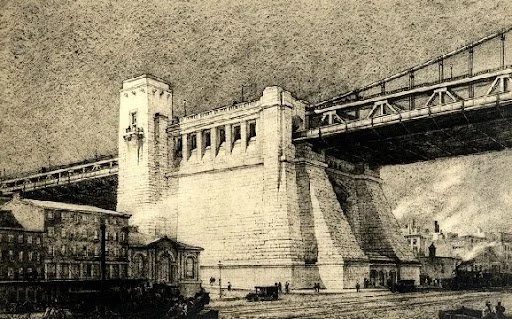
The construction of the bridge was extremely technical and complicated, requiring workers to dig to the bedrock at the bottom of the river in chambers so highly pressurized that the laborers could not expel enough air to whistle while they tunneled. The bridge cost $37,103,765.42 to build (eight million dollars more than expected), but became quickly popular: over 32,000 vehicles drove across the first day it opened. Cret subsequently drafted the University Avenue Bridge and the Henry Avenue Bridge.
Cret began making plans for the Barnes Foundation in Merion, PA in 1923 and completed the project two years later. Not long after, he collaborated with Jacques Greber to design the Rodin Museum, and in 1936, Cret drafted the plan for the gates to The Woodlands Cemetery.
After the demise of the original McArthur Gates in 1936—due to the expansion of University Avenue—Paul Cret was approached by the Cemetery Company to make plans for a new gatehouse. Cret’s firm designed a few options for the new entrance. “Designs ranged from florid Baroque to stark, classicizing Modern; two of the most original called for reuse of McArthur's columns. In the end, though, conservatism and new materials won out. The Cemetery settled on simple limestone lodges whose fronts stepped forward as rusticated pilasters framing metal doors. Pedestrians familiar with McArthur's iron gate would have seen its central winged-hourglass motif reappear in Cret's replacement. The estimated construction cost came to $12,847 - roughly half of the previous gate's price without counting for inflation” (HALS Report, page 79-80). The collection of Cret’s design drawings is located in the Athenaeum of Philadelphia.
Then in 1947, as the War Department prepared for the construction of the VA Hospital after World War II, Cret's successors, Harbeson Hough Livingston & Larson, drew up plans for moving their deceased principal's work from its location at what is today 39th and Woodland Avenue, west to 40th Street. This would be the final move for The Woodlands gates. Now the cemetery opened onto a triangular area at the foot of 40th Street where westbound trolleys emerged from the ground.
Throughout his career, Cret advised several major universities, including Brown, Harvard, Penn and the University of Texas at Austin on campus architecture.
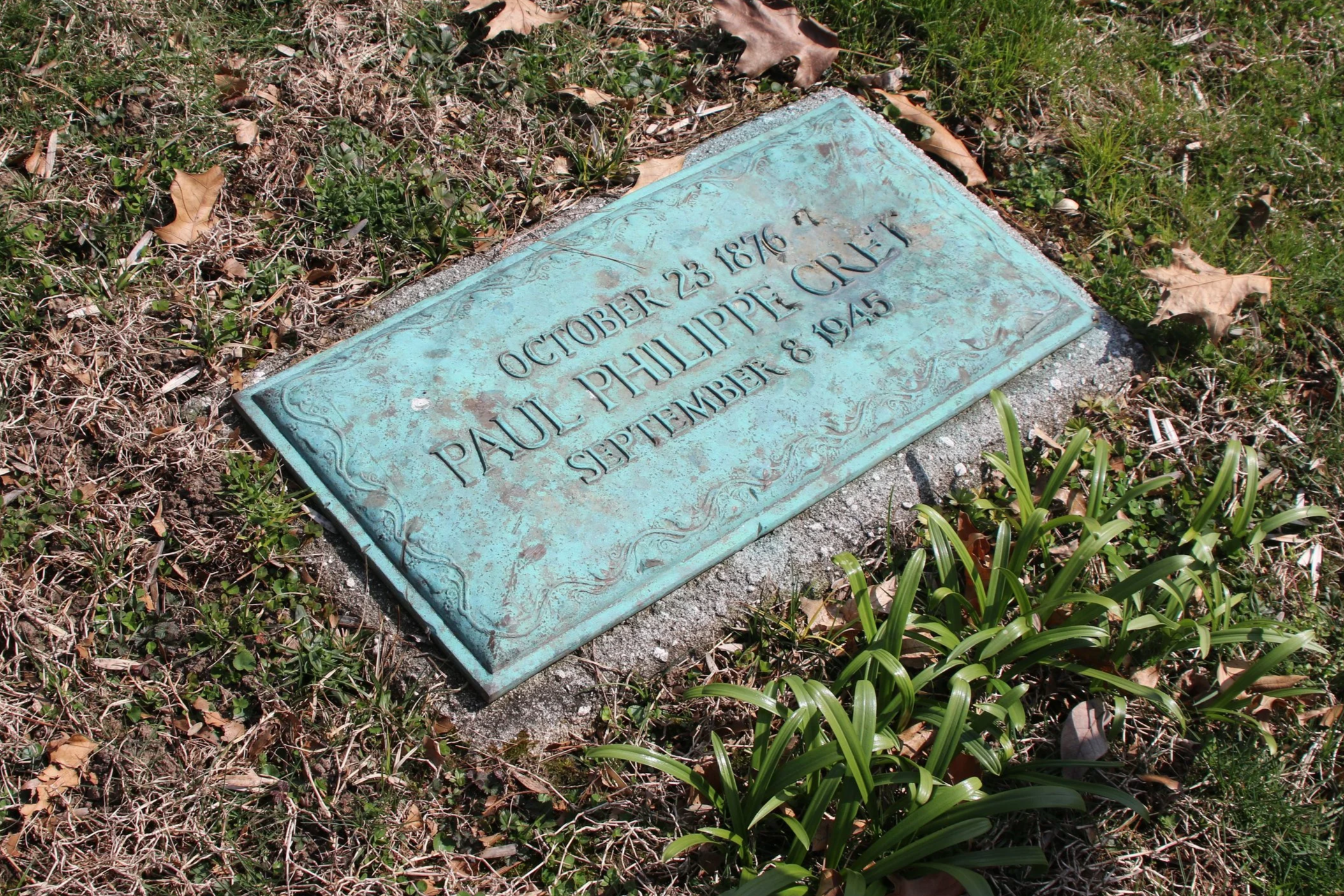
On September 8, 1945, Paul Cret died of heart disease in Philadelphia, at age 69. He is buried in Section K of The Woodlands, beneath a marker of his own design. Many of his creations still stand today in Philadelphia, and have made an immense impression on the architectural fabric of the city.